The mid-afternoon slump feels like a personal failure—a sudden loss of willpower, focus, or drive. It isn’t. Your 3 PM brain fog is the predictable result of your morning choices, your eating habits, and how your body manages energy.
If you want to stay sharp until the end of the day, stop relying on caffeine and start managing your biology. Here is what is actually happening in your head—and how to fix it.

What Actually Causes the 3 PM Crash
Your brain doesn’t lose focus by accident. Three main triggers come together in the afternoon to drain your energy:
1. Sleep Pressure Meets the Brain’s Internal Clock
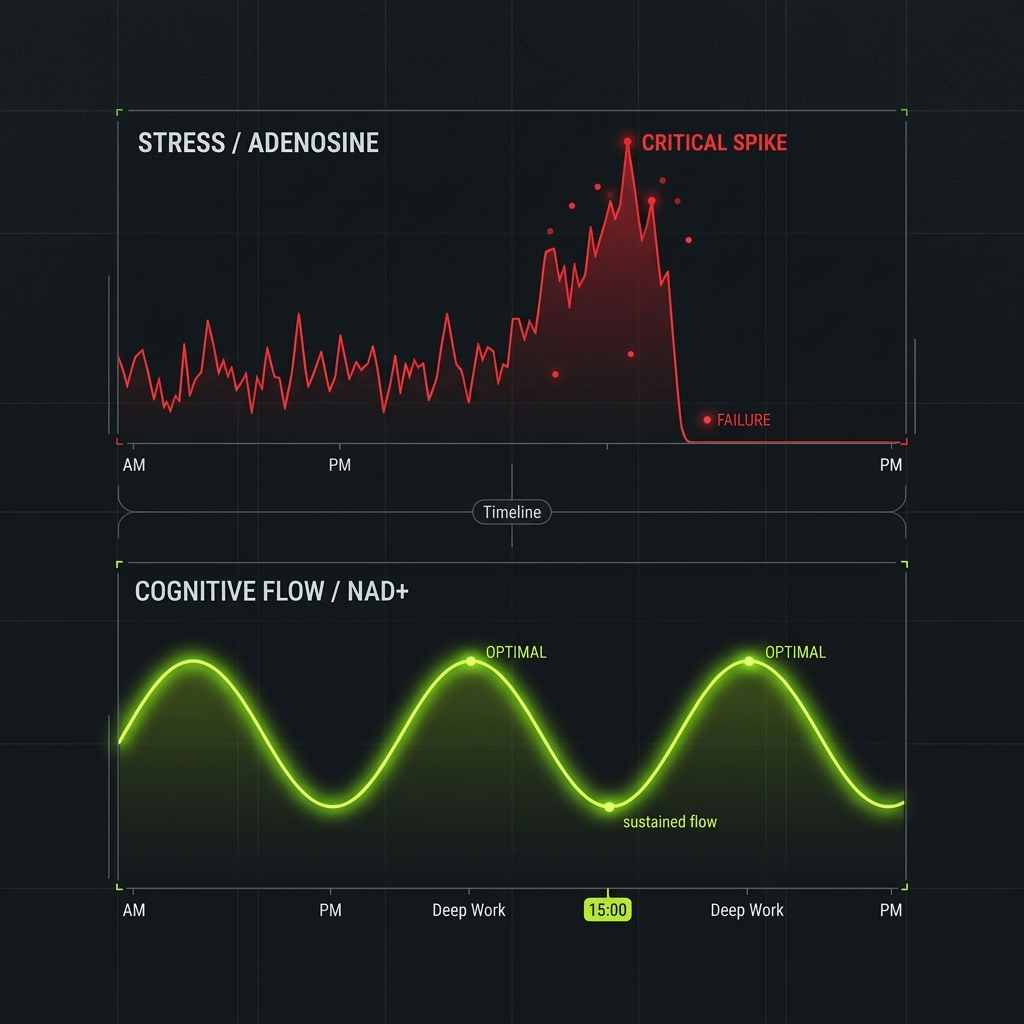
From the moment you wake up, your brain burns energy and builds up a natural chemical called adenosine. Think of it as a “fatigue signal” that slowly accumulates in your system throughout the day.
At the same time, your body runs on an internal clock. Humans are hardwired to experience a natural dip in alertness roughly 7 to 9 hours after waking up—a phenomenon well-documented in sleep research published in Sleep Medicine Reviews. When maximum fatigue signals collide with this afternoon energy slump, your mental speed and short-term memory drop dramatically.

2. Heavy Lunches and Blood Sugar Rollercoasters
If your lunch consists of fast-digesting carbs without enough protein or fiber, your blood sugar spikes fast. Your body responds by pumping out insulin to clear that sugar, leading to a sharp sugar crash an hour or two later.
Heavy, high-carb meals also signal your body to rest. As shown in research on amino acid transport and brain chemistry, high carbohydrate intake triggers a chain reaction that increases tryptophan in the brain. This accelerates the production of serotonin and melatonin—chemically telling your brain that it’s time to sleep.
3. Brain Fatigue from Constant Distractions
Spending your morning switching between tasks, checking messages every five minutes, and reacting to constant notifications wears out your brain’s command center. As clinical studies on mental fatigue and focus by Van Dongen et al. demonstrate, prolonged focus without clear breaks drains your mental battery. By 3 PM, your brain is simply exhausted from managing the noise.
Simple Protocols to Fix Afternoon Brain Fog
You don’t need another high-dose energy drink to force a tired brain to work. You just need to smooth out the energy spikes and crashes you created earlier in the day.
Protocol 1: Fix Your Lunch Plate
Build your lunch around protein, fiber, and healthy fats before adding complex carbs. Fiber slows down digestion, keeping your energy stable and preventing the sharp blood sugar crash that causes afternoon sleepiness.

Protocol 2: Take a 10-Minute Walk After Lunch
A brief 10-to-15-minute walk right after eating helps your muscles absorb glucose from your bloodstream. Research by Reynolds et al. in Diabetologia proved that light movement after meals lowers blood sugar spikes naturally, keeping your energy steady for the rest of the day.
Protocol 3: Smart Daily Habits
- Delay Morning Coffee: Wait 60–90 minutes after waking up before having your first cup. This lets your body naturally clear morning grogginess and prevents a massive afternoon caffeine crash.
- Get Afternoon Sunlight: Step outside for 10–15 minutes of natural sunlight around 1:00 PM. Bright light signals your internal clock that it’s still time to be awake and focused.
- Batch Your Work: Stop checking email every few minutes. Focus on one important task at a time in the morning to protect your mental energy for the afternoon.
From Theory to System: Why Isolated Fixes Fail
Fixing a 3 PM focus slump in the real world requires balancing multiple variables at once—your training schedule, glycemic control, targeted supplement protocols, and continuous self-monitoring. Changing one piece of the puzzle while ignoring the rest rarely moves the needle.
If you are ready to stop guessing and build a cohesive, repeatable routine, explore these foundational resources – this is the beginner level of biohacking.
If you want to skip the trial-and-error phase entirely, I offer direct 1-on-1 mentoring. We will evaluate your entire routine—from physical training and nutrition to supplement stacks and daily sleep data—to construct a fully customized biohacking system tailored to your specific schedule, workload, and biology.
Medical Disclaimer: The information provided is for educational purposes only. I operate as a health coach, not a licensed medical professional.